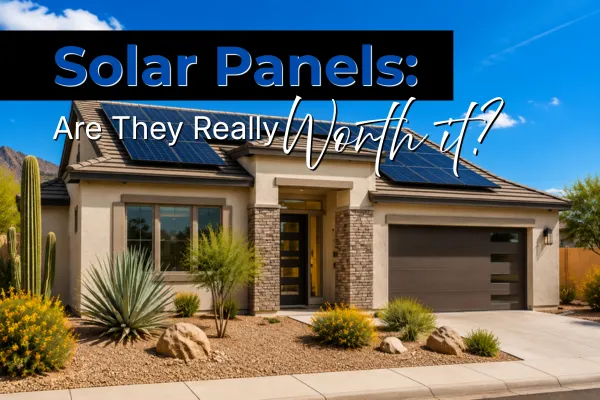
Solar Panels: Are They Really Worth It?
With over 300 days of sunshine each year, Arizona seems like the perfect place for solar panels.
So are they worth it?
My answer is...
It depends.
I've worked with buyers who specifically wanted solar and others who wouldn't even consider a home that had it.
The decision isn't as simple as "yes" or "no." It's about understanding how the system fits your home, your finances, and your long-term plans.
Understand the Type of System
Not all solar systems are the same.
Some homeowners own their systems outright.
Others have leased the equipment or entered into long-term power purchase agreements.
Those differences matter.
Owned systems can often add value and are generally simpler to transfer during a sale.
Leased systems may require the buyer to assume the lease or qualify with the solar company, which can add another step to the transaction.
Before making an offer on a home with solar, be sure you understand exactly what you're buying.
Solar Isn't Maintenance-Free
Solar panels themselves require very little maintenance, but the system still needs occasional attention.
Inverters eventually need replacement.
Monitoring systems should be checked periodically.
Dust and debris may reduce efficiency if allowed to build up over time.
Like any major home improvement, solar performs best when it's maintained properly.
Think About Your Roof First
One of the biggest pieces of advice I give homeowners is this:
Have your roof inspected before installing solar panels.
If your roof is nearing the end of its life, replacing it after the panels are installed can become significantly more expensive.
The panels typically need to be removed, the roof replaced, and then the system reinstalled.
Taking care of the roof first can save thousands of dollars later.
Solar Is Only One Part of the Equation
Sometimes homeowners focus entirely on solar while overlooking other ways to improve efficiency.
Updated windows...
Additional attic insulation...
A well-maintained HVAC system...
Quality weather stripping...
Shade trees...
These improvements can often work together with solar to create a much more efficient home.
Energy efficiency is rarely about one upgrade.
It's about how the entire home performs.
The Industry Continues to Evolve
The solar industry has grown tremendously over the years, but it continues to change.
Companies come and go.
Technology improves.
Financing options evolve.
That's why I encourage homeowners to research the installer, understand the warranty, compare proposals carefully, and ask plenty of questions before signing a contract.
A little homework today can prevent headaches later.
💬 Jill's Insider Tip
One thing I've learned is that buyers don't automatically see solar as a positive—or a negative.
Some buyers love it.
Others worry about leases, maintenance, or future repairs.
That's why it's so important to keep good records.
If you've installed solar, hang on to your warranty information, installation documents, and utility savings.
Having that information available can make buyers feel much more comfortable when it's time to sell.
💬 Jill's Final Take
I'm not for solar.
I'm not against solar.
I'm for making informed decisions.
For some homeowners, solar is an outstanding investment.
For others, different energy-efficiency upgrades may provide a better return.
The important thing is understanding your options before making a decision—not just following a sales pitch.
If you're buying or selling a home with solar panels—or you're considering installing them—I'd be happy to help you understand how solar can affect your home's value, marketability, and overall appeal. Every situation is different, and making an informed decision is always the best investment.
Related Articles:

